As sustainability becomes a decisive factor in material selection, vinyl—scientifically known as polyvinyl chloride (PVC)—continues to spark debate. Some view it as problematic plastic; others recognize its durability and long lifecycle advantages. The truth sits in the middle. Vinyl can be reused and recycled effectively, but only when supported by proper design, collection systems, and specialized recycling technologies.
This expert guide explains whether vinyl truly fits within a circular economy, how recycling actually works, and what environmental and economic impacts should be considered.
Contents
What Is Vinyl (PVC) and Why Does It Matter for Sustainability?
Vinyl is a synthetic polymer made primarily from chlorine (derived from salt) and ethylene (derived from natural gas or petroleum). This composition gives PVC its unique durability, chemical resistance, and long service life across industries like construction, healthcare, and transportation.
From a lifecycle perspective, vinyl’s strength lies in longevity. Products such as flooring, pipes, wall coverings, and medical tubing can last decades with minimal degradation. That durability reduces replacement frequency and lowers cumulative resource consumption over time—an essential principle in circular material management.
Authoritative reference (plain text):
US Environmental Protection Agency – Plastics and Recycling: https://www.epa.gov/plastics
How Long Does Vinyl Last Compared to Other Materials?
Vinyl often outperforms many traditional materials in lifespan. PVC pipes can last over 50 years, vinyl flooring can last 20–30 years, and medical-grade vinyl equipment remains functional through multiple sterilization cycles.
This long life translates into lower lifecycle environmental impact because fewer replacements mean less manufacturing, transportation, and waste generation. Durability is therefore a sustainability advantage when managed correctly.
Lifecycle Comparison Table
| Material | Typical Lifespan | Replacement Frequency | Lifecycle Resource Impact |
|---|---|---|---|
| Vinyl (PVC) | 20–50+ years | Low | Lower long-term consumption |
| Wood | 10–20 years | Moderate | Requires maintenance & sealing |
| PET Plastic | 5–10 years | Higher | Frequent replacement cycles |
| Rubber | 10–15 years | Moderate | Degrades faster under stress |
Can Vinyl Be Reused Directly Without Recycling?
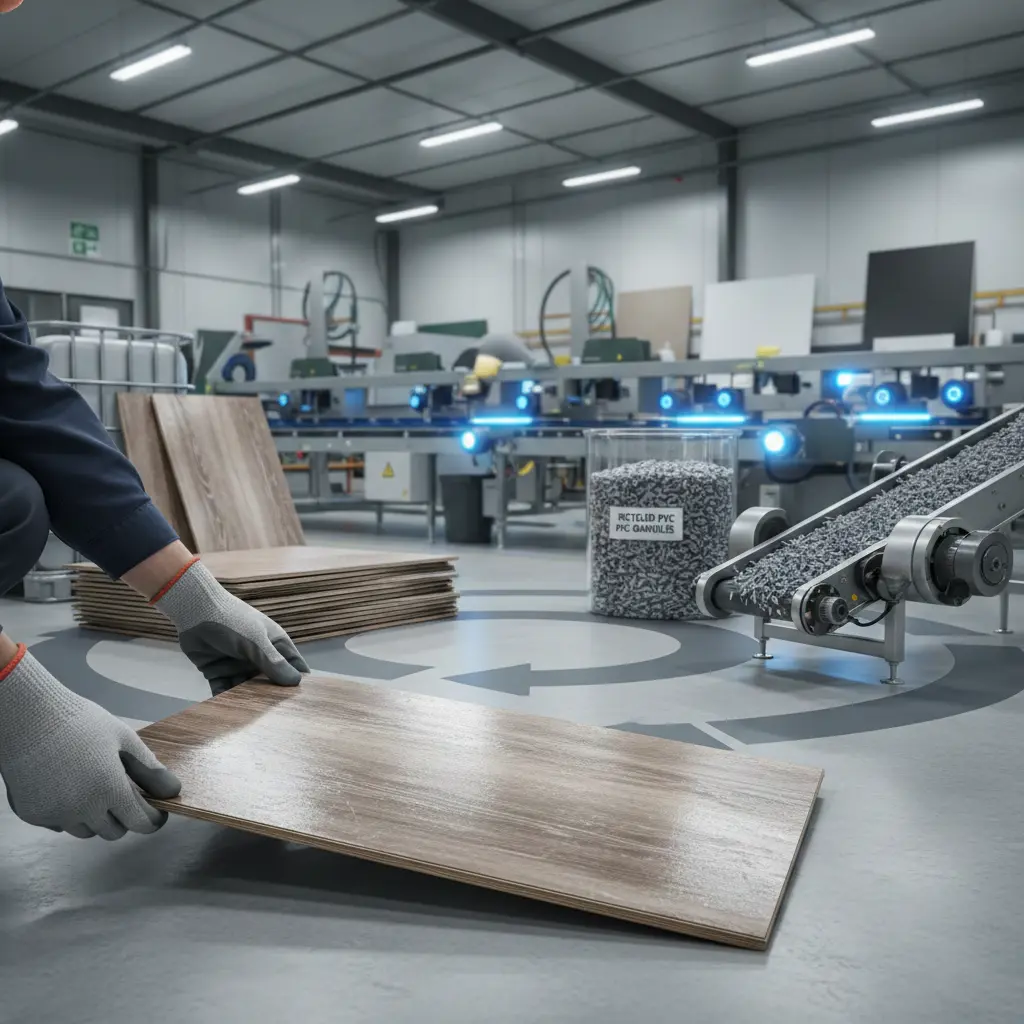
Yes. Reuse is often the most sustainable pathway. Vinyl flooring tiles, modular wall coverings, and industrial sheets are commonly removed during renovations and reinstalled elsewhere. In healthcare settings, certain vinyl surfaces are designed for repeated sterilization and extended reuse cycles.
This direct reuse avoids the energy-intensive remanufacturing process entirely, preserving the material’s original value and significantly reducing environmental impact.
Expert Insight
Reuse aligns with circular economy hierarchy principles, where reuse is prioritized before recycling due to lower energy consumption and minimal material transformation.
Authoritative reference:
Ellen MacArthur Foundation – Circular Economy Principles: https://ellenmacarthurfoundation.org/topics/circular-economy-introduction/overview
How Is Vinyl Recycled? Mechanical vs Chemical Recycling Explained
Vinyl recycling generally follows two main pathways:
Mechanical Recycling
Mechanical recycling involves shredding clean, sorted PVC waste into granules that can be melted and reprocessed into new products. This method works well for homogeneous industrial waste streams such as construction offcuts and manufacturing scraps.
Chemical (Feedstock) Recycling
Chemical recycling breaks down PVC into its molecular components. These components can then be used to create new polymer materials, supporting closed-loop recycling in more complex waste streams.
Recycling Method Comparison
| Recycling Type | Process | Best Use Case | Limitations |
|---|---|---|---|
| Mechanical Recycling | Grinding and remelting | Clean, sorted PVC waste | Requires contamination-free streams |
| Chemical Recycling | Polymer breakdown to raw components | Mixed or contaminated vinyl waste | Higher cost and technical complexity |
Authoritative reference:
Vinyl Institute Recycling Initiatives: https://www.vinylinfo.org/recycling/
Why Is Vinyl Recycling More Challenging Than Other Plastics?
Vinyl appears in diverse product forms—from flexible films to rigid pipes—which makes sorting difficult in general recycling systems. Mixed plastic waste often contaminates PVC streams, reducing recycling efficiency. Additionally, additives and composite layers in certain vinyl products require specialized separation technologies.
These factors mean dedicated PVC collection programs often outperform general plastic recycling systems.
How New Technology Is Improving Vinyl Recovery Rates
Advances in material detection technology and automated sorting systems are improving vinyl separation from mixed waste streams. Infrared optical scanners can now identify PVC with greater precision, reducing contamination and boosting recovery rates. Groups like the Vinyl Institute play a big part in creating standards and backing research on how to recycle.
Improved reprocessing equipment also enhances the mechanical recycling quality, enabling recycled vinyl to meet performance standards required in construction and infrastructure applications.
What Are the Environmental Benefits of Recycling Vinyl?
Recycling vinyl reduces energy consumption compared to producing virgin PVC resin. Lifecycle studies indicate that mechanical recycling can significantly cut greenhouse gas emissions and reduce reliance on fossil-derived raw materials.
Key environmental benefits include:
- Reduced landfill waste volume
- Lower carbon footprint during manufacturing
- Conservation of non-renewable resources
- Extended material lifecycle within circular systems
Authoritative reference (plain text):
European Commission – Plastics Circular Economy Strategy: https://environment.ec.europa.eu/topics/plastics_en
Are There Environmental Concerns Associated with Vinyl?
A balanced sustainability assessment must acknowledge concerns. Critics highlight issues such as potential release of hazardous compounds if vinyl is improperly incinerated. Additives used in older vinyl formulations have also raised environmental and health debates.
However, modern regulatory frameworks and controlled recycling systems have significantly improved safety standards, especially in industrial and medical-grade vinyl production.
Economic Value: Does Recycled Vinyl Support Cost Efficiency?
Recycled vinyl contributes to value creation by reducing material costs and supporting domestic manufacturing supply chains. For industries like construction and infrastructure, recycled PVC can provide durable performance at a lower price point than virgin materials.
This economic advantage makes recycled vinyl increasingly attractive as sustainability targets and cost pressures converge across global markets.
Expert Checklist: How to Maximize Vinyl Reuse and Recycling
Design Stage Checklist
- Use modular vinyl components for easy removal and reuse
- Avoid composite layers that hinder recycling
- Label PVC materials for easier sorting
Collection and Sorting Checklist
- Separate vinyl waste from mixed plastics
- Maintain contamination-free recycling streams
- Use dedicated PVC collection programs
Recycling Optimization Checklist
- Prioritize mechanical recycling for clean waste
- Use chemical recycling for complex waste streams
- Partner with certified PVC recyclers
Frequently Asked Questions (FAQs)
Is vinyl fully recyclable?
Yes, vinyl (PVC) can be recycled multiple times when properly sorted and processed through specialized recycling systems.
Which industries reuse vinyl the most?
Construction, healthcare, transportation, and infrastructure sectors commonly reuse vinyl due to its durability and chemical resistance.
Is recycled vinyl safe to use?
Recycled vinyl used in controlled manufacturing environments meets safety and performance standards for construction and industrial applications.
Does recycling vinyl reduce carbon emissions?
Yes. Recycling PVC generally consumes less energy than producing virgin polymer resin, lowering lifecycle carbon impact.
Final Verdict: Is Vinyl Sustainable in a Circular Economy?
Vinyl can play a meaningful role in sustainable material management when reuse is prioritized and recycling systems are optimized. Its exceptional durability, combined with evolving recycling technologies and industry collaboration, supports extended lifecycle performance and measurable environmental benefits.
However, achieving true sustainability requires balanced evaluation, improved waste sorting systems, and adherence to modern regulatory standards. When these conditions are met, vinyl becomes not just recyclable—but a strategically valuable material in the transition toward a circular economy.