Managing large residential properties—whether a 150-unit apartment complex or a multi-building housing portfolio—is fundamentally a financial management challenge disguised as operations.
Operating expenses in multifamily real estate can consume 40–60% of total rental income, and poor operational decisions quietly drain thousands of dollars every month.
Property owners who rely on reactive maintenance, fragmented procurement, and inefficient staffing often lose 15–30% of their potential profit margin. Source: Preventive vs. Reactive Maintenance: Which is Better for Your Facility | Sescom
In contrast, professional property managers apply data-driven cost control strategies that reduce expenses without sacrificing resident satisfaction or asset value.
This guide explains seven proven strategies used by experienced property managers and asset managers to reduce operating costs in large residential properties while maintaining service quality.
Contents
Cost Structure of Large Residential Properties
Understanding where money is spent is the first step toward controlling it.
| Expense Category | Typical Share of Operating Budget |
|---|---|
| Maintenance & Repairs | 20–25% |
| Utilities (Electricity, Water, Gas) | 15–20% |
| Staff Salaries | 20–30% |
| Insurance | 7–10% |
| Administrative & Management | 8–12% |
| Capital Reserves | 5–10% |
Source: Multifamily housing industry benchmarks.
Even small efficiency improvements in these areas can produce significant annual savings.
Strategy 1: Implement Preventive Maintenance Instead of Reactive Repairs
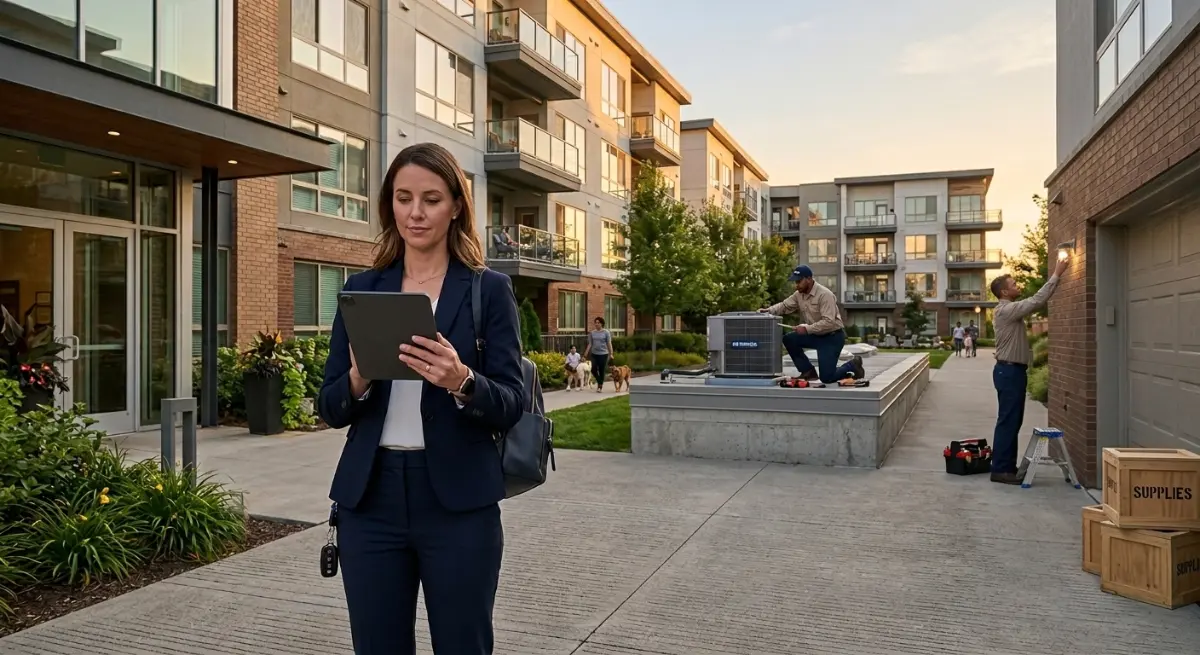
Reactive maintenance is one of the most expensive operational mistakes in property management.
Emergency repairs cost significantly more than scheduled maintenance because they require urgent labor, replacement parts, and service disruptions.
Example Cost Comparison
| Maintenance Type | Average Cost |
|---|---|
| Scheduled HVAC service | $250 |
| Emergency compressor replacement | $4,500–$6,000 |
| Elevator inspection | $300 |
| Elevator motor repair | $10,000+ |
Preventive maintenance programs help identify problems before they escalate.
Essential Preventive Maintenance Checklist
Monthly
- HVAC filter inspection
- Plumbing leak detection
- Fire safety system checks
Quarterly
- Elevator mechanical inspections
- Roof drainage inspection
- Electrical panel testing
Annually
- Boiler servicing
- Structural inspection
- Insurance compliance review
Properties with structured maintenance programs often experience 12–18% lower repair costs annually.
Strategy 2: Centralize Procurement and Standardize Materials
Large properties frequently lose money due to fragmented purchasing practices.
When maintenance teams buy supplies independently, the property loses the advantage of bulk purchasing and vendor negotiation. Reference: Supplier negotiations: Driving Down Costs through Bulk Purchasing – FasterCapital
Centralized procurement allows property managers to negotiate portfolio-wide vendor contracts.
Benefits of Centralized Procurement
- Lower supplier pricing
- Reduced inventory complexity
- Faster repair turnaround
- Simplified warranty claims
Example Savings from Bulk Purchasing
| Item | Individual Purchase Price | Bulk Contract Price |
|---|---|---|
| LED light fixtures | $22 | $15 |
| Kitchen faucets | $75 | $52 |
| HVAC filters | $9 | $5 |
For a 200-unit building, standardized procurement can save $20,000–$40,000 annually.
Strategy 3: Optimize Energy Efficiency
Utilities are one of the largest recurring costs in residential properties.
Energy-efficient upgrades can significantly reduce operating expenses.
High-Impact Energy Upgrades
| Upgrade | Estimated Cost | Payback Period |
|---|---|---|
| LED lighting retrofit | $4,000 | 1–2 years |
| Smart thermostats | $7,000 | 2–3 years |
| High-efficiency water heaters | $9,000 | 3 years |
| Solar panels (common areas) | $30,000 | 5–7 years |
Typical Energy Reduction Impact
Energy Savings Potential

LED Lighting Retrofit      ↓ 20%
Smart HVAC Controls        ↓ 15%
Water Heating Efficiency   ↓ 12%
Building Automation        ↓ 10%
Conducting a professional energy audit can identify systems responsible for the majority of energy waste.
Many utility providers also offer rebate programs for energy upgrades, which further reduce upfront costs.
Strategy 4: Use Property Management Technology
Manual administrative tasks create hidden operational costs.
Modern property management platforms automate routine operations and provide real-time performance insights.
Core Software Capabilities
- Online rent collection
- Automated maintenance requests
- Vendor management
- Digital lease documentation
- Expense tracking
Operational Impact
| Process | Manual Time | Automated Time |
|---|---|---|
| Rent collection | 20 hours/month | 2 hours |
| Maintenance dispatch | 10 hours | 1 hour |
| Resident communication | 15 hours | 3 hours |
Technology adoption can reduce administrative labor by 30–50%.
It also improves resident satisfaction because requests are processed faster.
Strategy 5: Optimize Staffing and Outsourcing
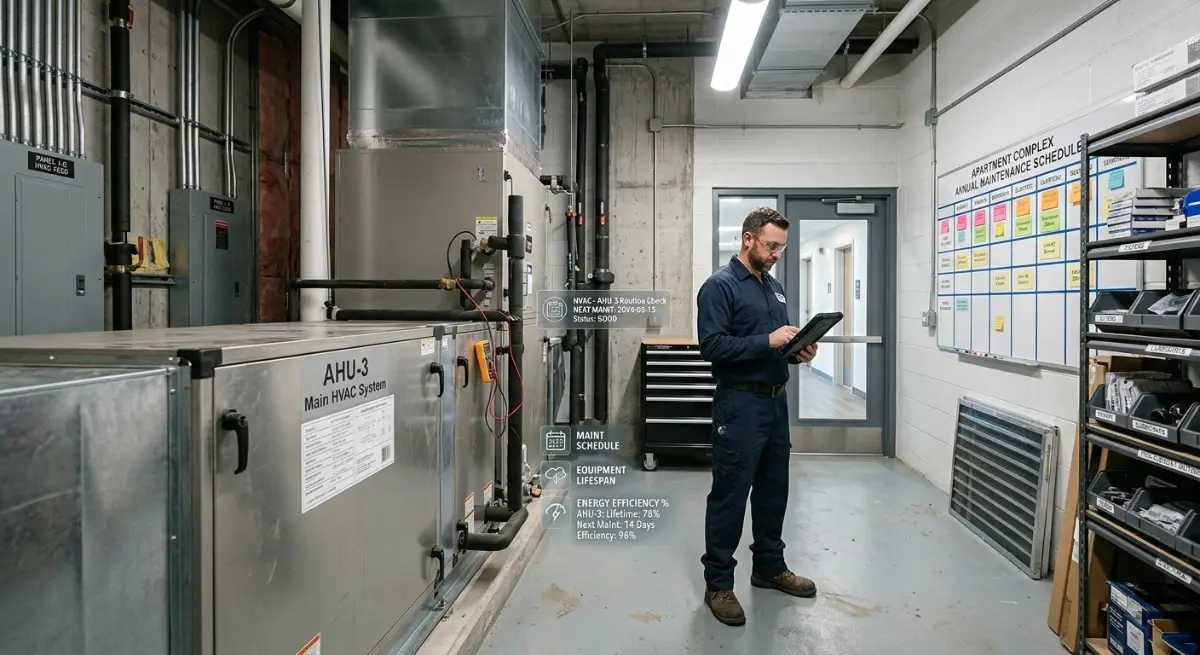
Labor is typically the largest expense category in property management.
An inefficient staffing structure can significantly inflate operating costs.
Hybrid Staffing Model
A balanced approach combines in-house staff for routine tasks with outsourced specialists for complex services.
Recommended Staffing Structure
| Role | In-House or Outsourced |
|---|---|
| General maintenance | In-house |
| Landscaping | Outsourced |
| Elevator servicing | Outsourced |
| HVAC inspection | Outsourced |
| Property management | In-house |
Cross-training maintenance staff also improves efficiency.
For example, technicians trained in plumbing, electrical, and HVAC basics reduce the need for external contractors.
Strategy 6: Strategic Renovation and Lifecycle Planning
Many property owners make the mistake of performing piecemeal renovations, which increases long-term costs.
Lifecycle planning focuses on timing upgrades strategically.
Major Building Component Lifespans
| Component | Expected Lifespan |
|---|---|
| Roofing | 20–25 years |
| HVAC systems | 12–18 years |
| Water heaters | 10–15 years |
| Flooring | 8–12 years |
Planning replacements in advance allows property managers to:
- negotiate contractor discounts
- bundle projects across units
- avoid emergency repairs
Lifecycle planning can reduce renovation costs by 15–25%.
Strategy 7: Optimize Inventory Management
Maintenance materials are frequently wasted due to poor inventory control.
Common issues include:
- duplicate purchases
- lost parts
- emergency supply orders
A centralized inventory system ensures the property maintains optimal stock levels without overspending.
Inventory Best Practices
- Assign standardized part numbers
- Track usage rates
- Set automatic reorder thresholds
- Maintain vendor contracts
Example Inventory System
| Item | Minimum Stock | Reorder Level |
|---|---|---|
| HVAC filters | 100 | 50 |
| LED bulbs | 150 | 75 |
| Plumbing seals | 200 | 100 |
This system prevents emergency purchases, which often cost 20–40% more than scheduled procurement. Consider order consolidation for routine supplies and fixtures to take advantage of bulk pricing on multifamily building supplies.
Implementation Checklist for Property Managers
Use this framework to apply these strategies effectively.
Step-by-Step Cost Optimization Plan
Time Needed : 90 days 00 hours 00 minutes
Step-by-Step Cost Optimization Plan
Conduct operational audit
Evaluate maintenance costs, staffing efficiency, and procurement practices.
Analyze energy consumption
Identify high-usage systems through energy audits.
Implement centralized procurement
Standardize materials and negotiate supplier contracts.
Adopt property management software
Automate rent collection and maintenance tracking.
Create preventive maintenance schedules
Prevent emergency repairs.
Develop lifecycle renovation plan
Budget for long-term capital expenses.
Monitor performance metrics
Track savings and operational efficiency.
Frequently Asked Questions
How much should maintenance cost per unit?
Typical annual maintenance cost per unit:
Property Age
Average Cost
New properties
$400–$600
Mid-age properties
$700–$900
Older properties
$1,000–$1,500What is the biggest expense in property management?
Labor costs and maintenance expenses usually represent the largest operational costs, often accounting for 40–50% of operating budgets.
How can property managers reduce energy costs?
The most effective strategies include:
LED lighting upgrades
smart HVAC controls
water heating efficiency improvements
building automation systemsHow often should preventive maintenance be performed?
Most systems require quarterly inspections, while critical infrastructure such as boilers and elevators should be inspected annually.
Conclusion
Cost savings in large residential property management come from structured planning, operational discipline, and data-driven decision-making.
Property managers who adopt preventive maintenance, centralized procurement, energy efficiency upgrades, technology automation, optimized staffing models, lifecycle planning, and inventory control can dramatically reduce operating expenses.
For large residential portfolios, implementing these strategies can reduce operating costs by 15–25% annually, while maintaining a high standard of living for residents and protecting long-term property value.
Smart property management is not just about maintaining buildings—it is about optimizing every operational process to maximize asset performance.
