What NJ law requires, what it costs, and how it impacts your home value
Contents
Quick Answer
Oil tank removal is mandatory in many New Jersey homes because underground heating oil tanks frequently leak, contaminating soil and groundwater. New Jersey environmental law (NJDEP UST & Spill Act rules) holds homeowners financially responsible for cleanup, which can exceed $100,000. Mortgage lenders, insurers, and home buyers often refuse properties with active or undocumented tanks, making removal legally and financially necessary.
Why New Jersey Is Stricter Than Most States
New Jersey has one of the highest concentrations of underground residential oil tanks in the U.S. due to heavy oil-heat use from the 1940s–1990s. Most of those tanks were bare steel, which corrodes after 20–30 years.
The state enforces these through:
- NJDEP Underground Storage Tank (UST) Program
- New Jersey Spill Compensation and Control Act (Spill Act)
- N.J.A.C. 7:14B environmental cleanup law
Under NJ law:
The homeowner is legally responsible for any oil contamination — even if the tank leaked decades ago.
There is no “grandfathering.”
Why Old Oil Tanks Are a Serious Environmental Threat
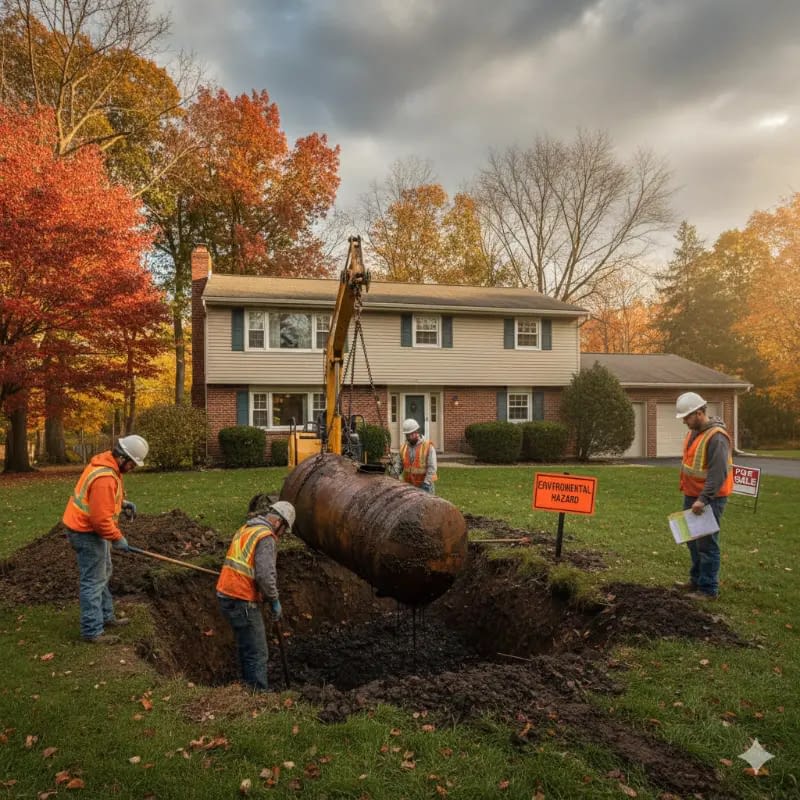
When an underground tank rusts, oil migrates through soil and often reaches groundwater. This creates:
- Toxic vapor intrusion into basements
- Drinking water contamination
- Damage to nearby properties
- Mandatory environmental reporting
Even a pinhole leak can spread contamination dozens of feet underground.
NJ DEP treats this as a hazardous discharge — not a minor home issue.
Real Financial Risk (Most Homeowners Don’t Expect This)
| Scenario | Typical NJ Cost |
|---|---|
| Tank removal only | $1,500 – $3,500 |
| Soil testing | $500 – $2,000 |
| Minor cleanup | $8,000 – $25,000 |
| Moderate contamination | $25,000 – $75,000 |
| Severe plume | $100,000+ |
And here’s the shock:
Your homeowners insurance does NOT cover oil pollution.
Without removal, you are exposed to unlimited environmental liability.
Why You Can’t Sell a House With an Oil Tank in NJ
Banks, insurers, and buyers treat oil tanks as financial landmines.
Mortgage lenders often require:
- Tank scan
- Soil test
- Removal certification
- NJDEP “No Further Action” (NFA) letter
If contamination is found:
- The deal stops
- The seller must clean it up
- Property value collapses
Real estate agents know this — which is why removal is now standard in NJ home sales. If you’re thinking about selling taking care of oil tank removal in New Jersey often makes the difference between selling and having your house sit on the market.
What Happens During Proper NJ Oil Tank Removal
Professional NJ contractors must follow:
Step-by-Step Process
- Tank scan & location mapping
- Oil pumping and vapor clearing
- Excavation
- Tank removal
- Soil sampling
- NJDEP reporting
- Contamination remediation (if needed)
- Issuance of NFA letter
This paperwork is what protects you during resale.
Why “Abandoning” a Tank Is No Longer Safe
Old rules allowed filling tanks with sand or foam.
NJ no longer considers this safe.
Abandoned tanks still leak — and you are still liable.
Banks now reject “abandoned-in-place” tanks.
Modern Heating Alternatives That Replace Oil Tanks
| Option | Benefits |
|---|---|
| Natural Gas | Lower cost, clean, resale friendly |
| Heat Pumps | Zero emissions, high efficiency |
| Electric HVAC | No combustion, low maintenance |
| Solar + Heat Pump | Energy independence |
Removing your tank allows you to upgrade — increasing resale value and lowering monthly costs.
Expert Homeowner Checklist
Before selling, refinancing, or renovating:
✔ Scan for underground tanks
✔ Remove tank if found
✔ Perform soil test
✔ Get NJDEP paperwork
✔ Store documentation permanently
✔ Inform insurer and lender
This avoids future lawsuits and buyer walk-aways.
FAQ
Is oil tank removal legally required in New Jersey?
Not in every case — but it becomes mandatory for real estate transactions, insurance approval, or if contamination is detected.
Can I sell my NJ home with an oil tank?
Most buyers and lenders will refuse unless it is removed and documented.
What if my tank never leaked?
You still must prove that through soil testing and NJDEP closure documents.
Who pays for cleanup?
The homeowner — even if the leak happened decades ago.
Does home insurance cover it?
Almost always no.
Why NJ Homeowners Are Removing Tanks in Record Numbers
It’s no longer just about compliance. It’s about:
- Protecting property value
- Avoiding six-figure liability
- Passing lender and buyer inspections
- Future-proofing the home
In New Jersey’s regulated real estate market, an underground oil tank is no longer a relic — it’s a risk.
Removing it isn’t optional anymore. It’s financial survival.
