The Snapshot:
Many men over 65 suffer from fatigue, low libido, and muscle loss, yet are told their testosterone is “normal” for their age. This creates a diagnostic “gray zone” where symptoms clash with serum levels. While elderly-men-testosterone-therapy can offer relief, medical guidelines prioritize safety over treating numbers alone. Here is what you need to know about navigating the controversy of treating symptoms versus blood test results.
What is the “Gray Zone” of Low Testosterone in Men?
Why “Normal” Testosterone Levels Might Be Making You Feel Old and Tired
As men age, their bodies change. You might notice less energy, difficulty building muscle, or a decreased interest in intimacy. You visit your doctor, expecting a solution, but the blood work comes back with a stamp of approval: “Normal.”
For millions of men over 65, this is the frustrating reality of the diagnostic “gray zone.” This occurs when a man’s testosterone levels hover in the “low-normal” range (often between 300 ng/dL and 400 ng/dL), yet he experiences significant symptoms of hypogonadism. Conversely, some men have clinically low levels but feel perfectly fine.
This discrepancy creates a significant dilemma in the medical community regarding elderly-men-testosterone-therapy. Should a doctor treat a number on a chart, or a living, breathing patient suffering from a diminished quality of life?
The Slow Decline: Why Your Hormones Aren’t What They Used to Be
To understand the gray zone, we must first understand the biology of aging. Unlike female menopause, which is relatively abrupt, male testosterone decline is gradual.
According to the American Urological Association, testosterone levels peak in early adulthood and drop about 1% per year after age 30 or 40. By age 65, a significant portion of the male population has levels that would be considered deficient in a younger man.
However, reference ranges on lab tests are notoriously broad. They often aggregate data from men aged 20 to 80. Consequently, a level of 300 ng/dL might be statistically “normal” for an 80-year-old, but for a man who has always functioned at 800 ng/dL, dropping to 300 can feel catastrophic. This relative drop is the driving force behind many requests for elderly-men-testosterone-therapy, yet it is often overlooked in standard clinical settings.
Stuck in the Middle: The Diagnosis Dilemma That’s Leaving Men Untreated
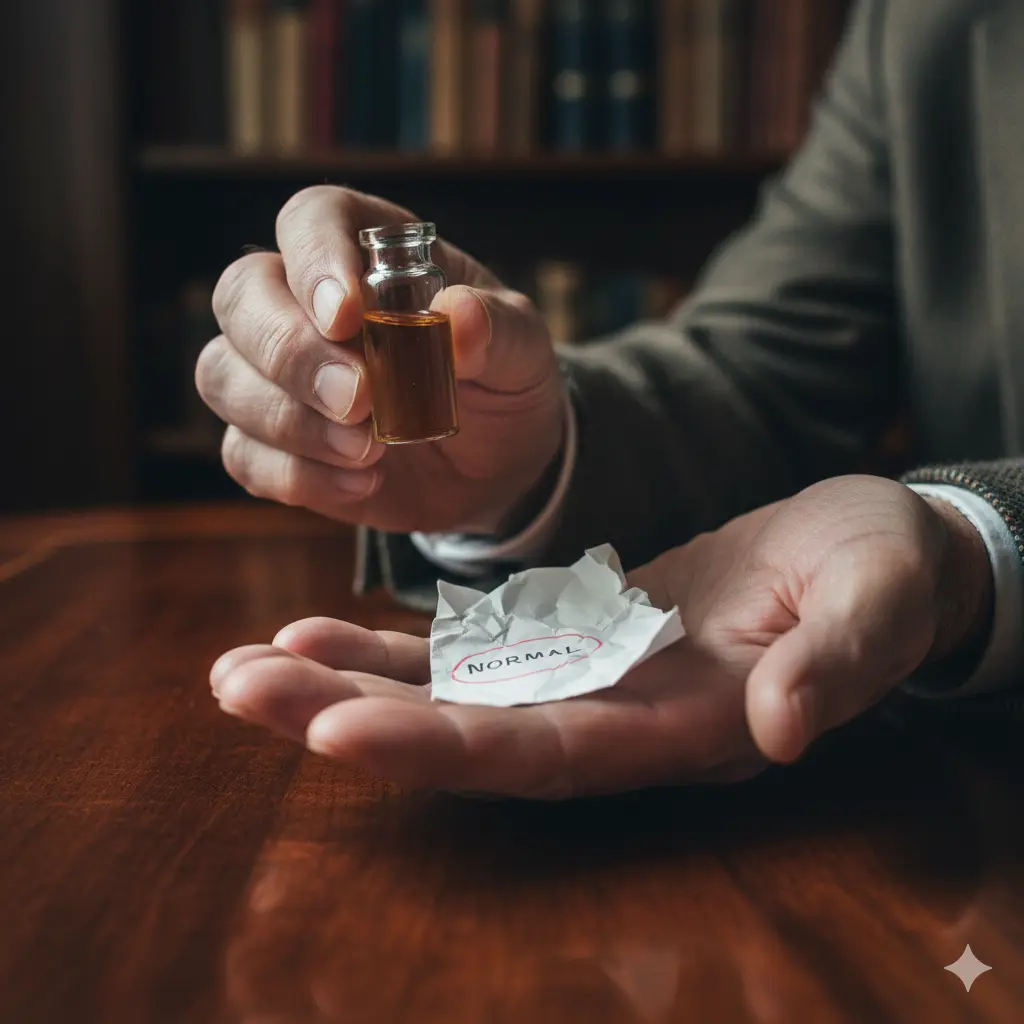
How Do Doctors Define Relative Hypogonadism?
The medical term for this confusing middle ground is relative hypogonadism. This is a state where the testes produce enough testosterone to keep a man out of the “disease” category, but not enough to support optimal physiological function.
To visualize this difficulty, consider the following comparison of two common patient profiles seen in urology clinics:
| Patient Profile | Serum Testosterone Level | Symptom Severity | Typical Treatment Path |
|---|---|---|---|
| Patient A | Very Low (e.g., 200 ng/dL) | None (Asymptomatic) | Observation (“Watch and Wait”) |
| Patient B | Low-Normal (e.g., 350 ng/dL) | Severe (Fatigue, Depression, ED) | The Gray Zone / Controversial |
Should Doctors Treat the Number or the Patient?
The controversy lies in the guidelines. Major health organizations, including the Endocrine Society, recommend diagnosing hypogonadism only when both low serum levels are present and consistent symptoms are reported.
However, the strict interpretation of “low levels” often excludes Patient B. Many conservative physicians are hesitant to prescribe elderly-men-testosterone-therapy for men with “normal” numbers due to the potential risks of treatment. They argue that raising testosterone in this gray zone may not provide meaningful benefits and could expose the patient to unnecessary cardiovascular risks.
Conversely, proponents of treating the symptoms argue that quality of life is the primary metric of health. If a man is unable to work, exercise, or engage in relationships due to low-normal testosterone, simply pointing to a lab report does not solve his problem.
Blood Work Lies? Why Your Symptoms Might Be More Important Than the Numbers
What Symptoms Truly Matter in the Aging Male?
If you are stuck in the gray zone, your specific symptoms become the most critical data points. It is not enough to just “feel tired.” The clinical criteria for considering elderly-men-testosterone-therapy usually require the presence of specific, androgen-deficiency related signs:
- Sexual Dysfunction: Reduced libido, fewer spontaneous erections, and erectile dysfunction.
- Physical Changes: Loss of body hair, decrease in muscle mass (sarcopenia), and increase in body fat (particularly visceral fat).
- Cognitive/Emotional: Decreased motivation, “brain fog,” and even depressive symptoms that do not respond to standard antidepressants.
Does “Free” Testosterone Tell a Different Story?
One expert insight that often clears up the gray zone is the measurement of Free Testosterone. Total testosterone measures the entire amount of hormone in the blood, but much of it is bound to proteins (SHBG and albumin) and is unavailable to tissues.
As men age, SHBG levels increase. Therefore, an elderly man might have a “normal” total testosterone level, but his free testosterone—the active hormone—is rock bottom. Leading experts often suggest that evaluating free testosterone is essential before ruling out elderly-men-testosterone-therapy for a symptomatic patient.
Think You Need T? The Critical Safety Step You Must Never Skip
Why Are Multiple Tests Required Before Starting Therapy?
Safety is the paramount concern in Google’s YMYL (Your Money Your Life) health standards. You cannot walk into a clinic, complain of fatigue, and get a prescription on the spot.
Because testosterone levels fluctuate daily—and even hourly—best practices dictate that confirmatory testing is mandatory. A diagnosis of hypogonadism typically requires:
- Two separate morning blood tests (levels peak in the morning).
- Consistently low results on both occasions.
- A thorough exclusion of other causes (such as sleep apnea, thyroid issues, or opioid use).
What Are the Risks of Testosterone Therapy in the Elderly?
While elderly-men-testosterone-therapy can be life-changing for some, it carries specific risks for the geriatric population. The most significant concern is erythrocytosis—a thickening of the blood due to an increase in red blood cells. This significantly increases the risk of clots, strokes, and heart attacks.
Other considerations include:
- Prostate Health: While modern research suggests testosterone therapy does not cause prostate cancer, it can stimulate the growth of existing cancer. Therefore, a PSA screening and digital rectal exam are mandatory prerequisites.
- Cardiovascular Health: The FDA advises caution in prescribing testosterone to men with heart failure or a history of cardiovascular events.
Expert Checklist: How to Advocate for Your Health
If you believe you are in the “gray zone,” do not accept a simple “you’re just getting old” as a diagnosis. Use this checklist to prepare for a productive conversation with your healthcare provider.
Before Your Appointment:
- Track your symptoms: Keep a journal for two weeks noting energy levels, sleep quality, and libido.
- List your meds: Some medications (opioids, glucocorticoids) suppress testosterone.
- Fast properly: Ensure you schedule blood work in the morning and fast overnight as food can lower testosterone readings temporarily.
Questions to Ask Your Doctor:
- “Did you check my Free Testosterone levels, not just Total?”
- “Is my SHBG level elevated, which might be binding my testosterone?”
- “Given my symptoms, is a therapeutic trial of elderly-men-testosterone-therapy an option if we monitor my blood counts closely?”
Frequently Asked Questions (FAQs)
Is testosterone therapy safe for men over 70?
Yes, for many men over 70, testosterone therapy is safe provided they undergo rigorous cardiovascular screening and regular blood monitoring (hematocrit and PSA). However, it is not recommended for men with untreated prostate cancer or severe heart failure.
What is a normal testosterone level for a 65-year-old man?
While labs vary, a “normal” range is typically 300–1,000 ng/dL. However, experts often argue that men in the lower 300s may still benefit from therapy if they are symptomatic.
How long does it take for testosterone therapy to work in elderly men?
Most men notice improvements in energy and mood within 3 to 6 weeks. However, physical changes like muscle growth and fat loss typically require 6 to 12 months of consistent therapy alongside exercise.
Can low testosterone cause confusion in the elderly?
Yes, low testosterone has been linked to cognitive decline and “brain fog.” While it is not a primary cause of dementia, treating low T can sometimes improve mental clarity in elderly men.
References & Authoritative Sources
For further reading on the clinical guidelines and safety data referenced in this article, please consult:
- The Endocrine Society: Clinical Practice Guideline for Testosterone Therapy in Men with Hypogonadism – Testosterone Therapy for Hypogonadism Guideline Resources
- The American Urological Association: Diagnosis and Treatment of Hypogonadism – Testosterone Deficiency Guideline – American Urological Association
- Mayo Clinic: Testosterone Therapy: Potential Benefits and Risks – Testosterone therapy: Potential benefits and risks as you age – Mayo Clinic
- U.S. Food and Drug Administration (FDA): FDA Drug Safety Communication FDA issues class-wide labeling changes for testosterone products
Disclaimer: This article is for informational purposes only and does not constitute medical advice. Always consult with a qualified healthcare provider before starting or stopping any medical treatment.