Your heart does not work alone. Every heartbeat depends on the condition of your blood vessels—and the single most powerful molecule controlling them is nitric oxide (NO).
This naturally produced gas decides whether your arteries relax or constrict, whether blood flows smoothly or stagnates, and whether your risk of heart attack rises or falls. Modern cardiology now recognizes nitric oxide as a master regulator of cardiovascular health, yet millions of people unknowingly live in a state of nitric oxide deficiency.
What Is Nitric Oxide and Why Does It Matter for the Heart?
Nitric oxide is a biological signaling molecule produced inside the lining of your blood vessels (the endothelium). It was once considered a toxic gas—until scientists discovered it is one of the most important regulators of human circulation. This breakthrough earned the 1998 Nobel Prize in Physiology or Medicine.
Your body produces nitric oxide from:
- L-arginine and L-citrulline (amino acids)
- Dietary nitrates from vegetables
Once released, nitric oxide signals blood vessels to relax, widen, and allow more blood to flow. This directly lowers blood pressure and increases oxygen delivery to the heart, brain, and muscles.
Reference: https://www.nobelprize.org/prizes/medicine/1998/summary
How Does Nitric Oxide Control Blood Pressure and Blood Flow?
When nitric oxide is released from endothelial cells, it activates an enzyme called guanylate cyclase, which causes smooth muscle around arteries to relax. This process is called vasodilation.
The result:
- Wider arteries
- Lower resistance
- Reduced blood pressure
- Improved circulation
People with hypertension almost always show impaired nitric oxide production or rapid NO breakdown due to oxidative stress.
The American Heart Association confirms that endothelial dysfunction—often caused by nitric oxide loss—is a major driver of high blood pressure and atherosclerosis.
https://www.heart.org
What Is Endothelial Dysfunction and How Is Nitric Oxide Involved?
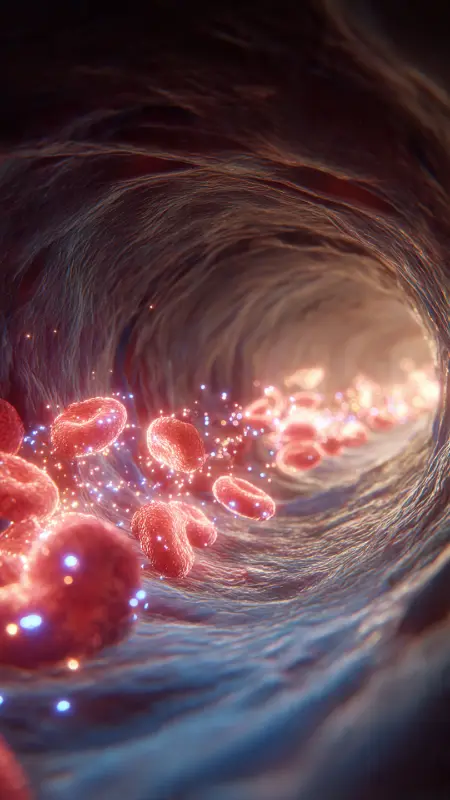
The endothelium is the thin layer lining every blood vessel. It acts like a living organ, releasing nitric oxide to:
- Prevent clot formation
- Stop inflammation
- Inhibit plaque buildup
- Regulate blood pressure
When nitric oxide levels drop, the endothelium becomes stiff, inflamed, and prone to cholesterol accumulation. This is called endothelial dysfunction—the first step toward heart disease.
PubMed: https://pubmed.ncbi.nlm.nih.gov/18439490
How Does Nitric Oxide Prevent Artery Blockage and Heart Attacks?
Nitric oxide:
- Prevents LDL cholesterol from oxidizing
- Inhibits platelet aggregation
- Reduces smooth muscle proliferation
- Protects against plaque formation
Without nitric oxide, arteries become inflamed, sticky, and narrow—perfect conditions for a heart attack.
Statin drugs partially work because they increase nitric oxide production, not just lower cholesterol.
https://www.ncbi.nlm.nih.gov/pmc/articles/PMC2690339
Why Is Erectile Dysfunction a Warning Sign of Heart Disease?
Erections depend entirely on nitric oxide. Viagra and similar drugs work by amplifying nitric oxide signaling.
Penile arteries are much smaller than coronary arteries. When nitric oxide declines, erectile dysfunction appears years before heart attacks.
ED is now recognized as an early marker of cardiovascular disease.
https://www.ncbi.nlm.nih.gov/pmc/articles/PMC3134888
Why Does Nitric Oxide Decline With Age?
After age 40:
- Endothelial nitric oxide synthase (eNOS) slows
- Oxidative stress increases
- Inflammation destroys NO
- Sedentary lifestyle worsens it
This is why aging is tightly linked to hypertension, heart disease, and stroke.
What Foods Increase Nitric Oxide Naturally?
Dietary nitrates convert into nitric oxide through oral bacteria and the gut.
| Food | Nitric Oxide Effect |
|---|---|
| Beets | Very high |
| Spinach | High |
| Arugula | High |
| Pomegranate | Moderate |
| Garlic | Moderate |
| Watermelon | Moderate |
| Dark chocolate | Mild |
| Citrus fruits | Supportive |
Important: Antibacterial mouthwash kills nitrate-converting bacteria, blocking nitric oxide production.
https://www.ncbi.nlm.nih.gov/pmc/articles/PMC4477141
Do Nitric Oxide Supplements Work?
| Supplement | Evidence |
|---|---|
| L-arginine | Moderate |
| L-citrulline | Strong |
| Beetroot extract | Strong |
| NO boosters | Variable |
| Nitroglycerin (medical) | Prescription only |
L-citrulline raises nitric oxide more effectively than L-arginine and improves blood flow and blood pressure.
Caution: People on nitrate heart medications should not use NO supplements.
How Can You Increase Nitric Oxide Without Supplements?
Doctor-recommended checklist
- Walk 30 minutes daily
- Do interval training
- Breathe through the nose
- Eat leafy greens
- Get sunlight
- Avoid smoking
- Reduce sugar
- Maintain healthy weight
Exercise alone can increase nitric oxide by up to 300%.
Which Heart Diseases Are Linked to Nitric Oxide Deficiency?
Nitric oxide deficiency contributes to:
- Hypertension
- Atherosclerosis
- Heart failure
- Stroke
- Peripheral artery disease
Frequently Asked Questions
Does nitric oxide lower blood pressure?
Yes. It relaxes arteries and reduces vascular resistance.
Can food really increase nitric oxide?
Yes. Vegetables like beets and spinach provide nitrates that convert into nitric oxide.
Is nitric oxide safe?
Naturally produced nitric oxide is essential. Supplements should be used carefully in heart patients.
Why do athletes use nitric oxide?
It increases blood flow, oxygen delivery, and endurance.
Final Medical Verdict
Nitric oxide is not a supplement trend—it is a core regulator of cardiovascular health. Protecting nitric oxide production may be one of the most powerful ways to prevent heart disease, improve circulation, and extend life.
About the Author
Dr. Toufiq Hassan Shawon, MBBS is a Medical Officer working in the Management Information System (MIS) wing of the Directorate General of Health Services (DGHS), Bangladesh, where he is directly involved in national health data governance, disease surveillance, and digital health system strengthening. With clinical training in internal medicine and public health informatics, Dr. Shawon specializes in translating biomedical research into practical, evidence-based guidance for cardiovascular prevention, metabolic health, and digital-driven healthcare delivery. He also leads multiple technology initiatives in healthcare as the CEO of BOSS HOST BD, bridging medicine, data science, and patient education to improve health outcomes at scale.