Buying a treadmill sounds easy—until you actually try to do it.
You open your browser, type in “treadmill for sale,” and suddenly you’re drowning in options. Prices are all over the place. Motor specs read like a foreign language. Some models fold neatly into a corner, others look like they belong in a commercial gym. Every listing promises something big, but very few explain who the machine is actually meant for.
And that’s usually why so many treadmills end up collecting dust in a spare room. It’s not laziness or lack of discipline—it’s buying a machine that never really fit the person using it.
This guide is here to slow things down. Instead of hype and buzzwords, it walks you through how to choose a treadmill the way a physiotherapist or equipment specialist would: practical, clear-headed, and focused on what actually works for your body, space, and routine.
Contents
Why Do So Many Home Treadmills Fail to Deliver Long-Term Value?
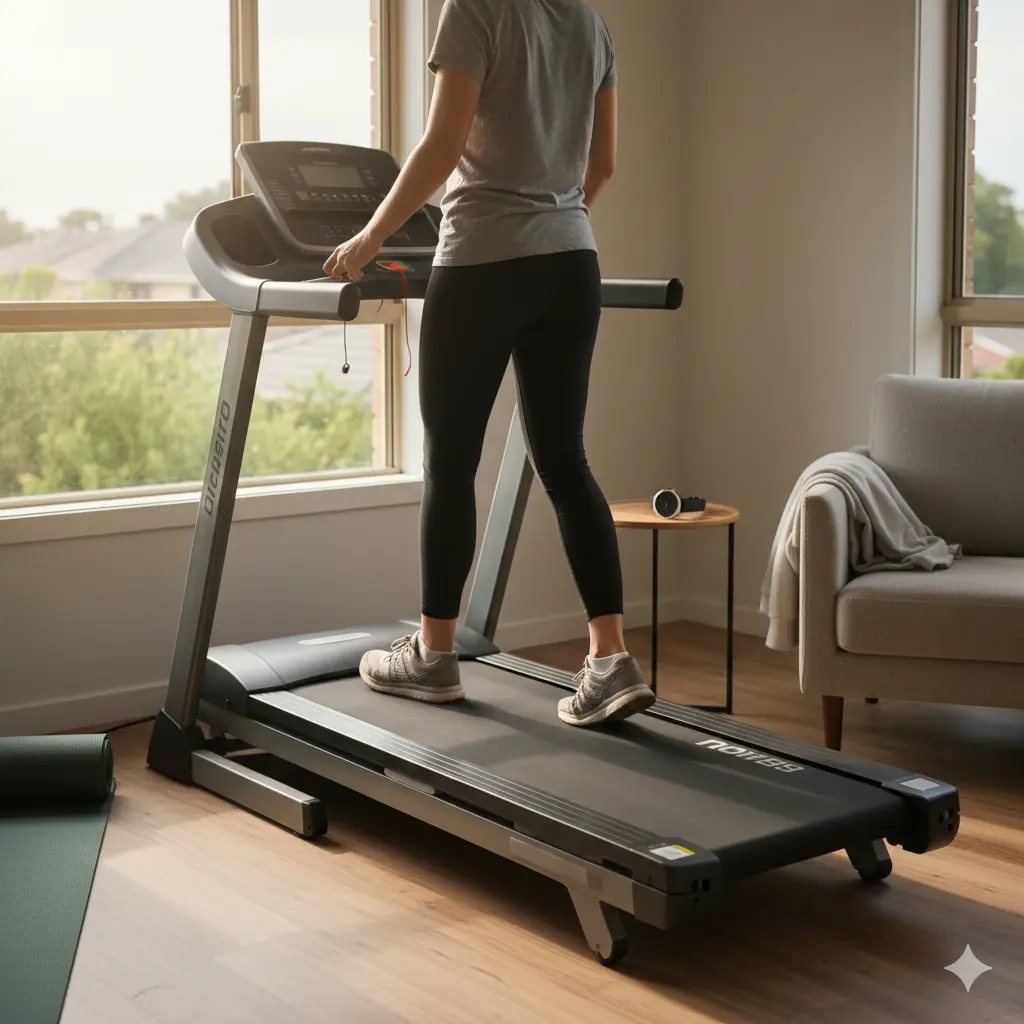
Short answer? Most people choose a treadmill based on price tags or flashy features, not on how they’ll actually use it.
A treadmill isn’t just another piece of cardio gear—it’s a machine that takes constant, repetitive stress. If that machine isn’t built for your walking pace, running style, or how often you plan to use it, the cracks show up quickly. Motors get loud, belts start slipping, frames feel shaky, and before long, using it feels more annoying than motivating.
In Australian homes especially—where space is tight, power points are limited, and noise can be a real issue—getting the right treadmill from the beginning makes a huge difference. The right choice doesn’t just perform better; it fits into your home and your routine without becoming a headache.
What Makes a Treadmill So Valuable for Home Fitness?
Treadmills remain one of the most reliable fitness tools because they remove barriers.
- No weather dependence
- No traffic or lighting concerns
- Predictable, joint-friendly surfaces
- Easy progression from walking to running
From rehabilitation clinics to elite training centres, treadmills are used because walking and running are foundational human movements.
According to the American College of Sports Medicine, regular walking or running significantly improves cardiovascular health, metabolic function, and long-term mobility:
https://www.acsm.org
What Types of Treadmills Are Available in Australia?
In short: not all treadmills are designed to be used the same way.
| Treadmill Type | Best For | Typical Usage |
|---|---|---|
| Home-Use | Walking, light jogging | 3–5 hrs/week |
| Semi-Commercial | Families, frequent runners | 5–15 hrs/week |
| Commercial | Gyms, studios | 30+ hrs/week |
Expert insight:
Buying below your usage needs leads to faster wear. Buying slightly above them improves stability, quietness, and lifespan.
How Important Is Motor Power When Choosing a Treadmill for Sale?
Short answer: extremely important—and often misunderstood.
Ignore peak horsepower. Focus on Continuous Horsepower (CHP).
Practical Motor Guidelines
- Walking only: 1.75–2.0 CHP
- Jogging: 2.25–2.75 CHP
- Running: 3.0 CHP or higher
Why this matters: running places continuous load on the motor. Underpowered motors overheat, surge, and fail earlier.
For engineering fundamentals on electric motor load ratings:
https://www.engineeringtoolbox.com/nema-electrical-motors-efficiency-ratings-d_1501.html
Does Belt Size Really Affect Comfort and Safety?
Yes—and more than most people expect.
A treadmill belt that’s too short or narrow forces you to modify your natural stride, increasing fatigue and missteps.
Recommended Running Surface Sizes
| Activity | Belt Length | Belt Width |
|---|---|---|
| Walking | 120–130 cm | 45 cm |
| Jogging | 135–140 cm | 48 cm |
| Running | 145–155 cm | 50+ cm |
Expert note: Taller users benefit most from longer decks, especially during fatigue when stride length increases.
Are Incline and Speed Controls Just “Nice to Have”?
Not really—they determine how long a treadmill stays interesting.
Incline allows intensity increases without increasing impact. That’s why incline walking is widely used in cardiac rehab and weight-management programs.
Research shows incline walking significantly raises heart rate and energy expenditure at lower joint stress:
https://pmc.ncbi.nlm.nih.gov/articles/PMC9987441/
How Much Space Do You Actually Need for a Treadmill?
This is where many buyers miscalculate.
Space Checklist
- Treadmill footprint (in use)
- At least 1–2 metres rear clearance
- Ceiling height + incline allowance
- Walking paths around the machine
Folding treadmills help—but only if:
- The frame is stable when unfolded
- The hinge system is reinforced
- The folded height suits your ceiling
Do Consoles and Touchscreens Improve Results?
Short answer: they improve engagement, not fitness directly.
Clear, reliable metrics matter more than flashy screens:
- Speed
- Time
- Distance
- Incline
Touchscreens can increase motivation, but mechanical reliability always matters more long-term.
Why Does Weight Capacity Say So Much About Build Quality?
Weight ratings aren’t just about the user—they reflect structural strength.
A higher rating usually means:
- Thicker steel frame
- Stronger deck
- Less vibration
- Quieter operation
Even lighter users benefit from sturdier treadmills.
What Should You Know About Warranty and Support in Australia?
A treadmill is a long-term appliance, not a disposable gadget. Choosing a reliable treadmill for sale starts with selecting a reputable retailer that provides clear specifications, strong warranty coverage, and local support. Australian-based fitness specialists typically offer better product guidance and after-sales service, helping buyers choose a treadmill that matches their space, usage needs, and fitness goals. Evaluating build quality, motor performance, and warranty terms ensures long-term value and consistent use.
Expert Warranty Priorities
- Frame: Lifetime or long-term
- Motor: At least 5–10 years
- Labour: Local service availability
Australian Consumer Law also provides protections for major appliances:
https://www.accc.gov.au/consumers/buying-products-and-services/consumer-rights-and-guarantees
Is Buying a Used Treadmill a Smart Idea?
Sometimes—but often riskier than it looks.
| New | Used |
|---|---|
| Warranty included | Often none |
| Known usage history | Unknown wear |
| Updated safety standards | May be outdated |
For frequent users, new treadmills are usually cheaper over time.
Expert Buyer Checklist (Save This)
Before choosing any treadmill for sale, confirm:
✅ Intended use (walking vs running)
✅ Continuous motor rating matches usage
✅ Belt size fits user height
✅ Weight capacity exceeds user weight
✅ Adequate space and ceiling clearance
✅ Local service and spare parts
✅ Warranty terms are clear
Frequently Asked Questions
What is the most important feature in a treadmill?
Motor durability and deck size have the greatest impact on long-term usability.
Can folding treadmills be used daily?
Yes, if motor power and frame stability are sufficient.
Are treadmills suitable for apartments?
Higher-quality models run quieter and vibrate less, making them more apartment-friendly.
Is incline training necessary?
Not mandatory, but it significantly increases workout variety and cardiovascular demand.
How long does a good treadmill last?
With proper maintenance, quality models last many years.
Is buying new safer than buying used?
Yes, due to warranty protection and predictable performance.
Final Takeaway: How to Choose With Confidence
The right treadmill isn’t the most expensive or feature-packed one—it’s the one that quietly supports your routine, day after day.
When you evaluate a treadmill for sale based on use case, build quality, and long-term support, you’re far more likely to end up with a machine that becomes part of your life—not something you eventually avoid.
That’s how treadmills earn their value.
References
- American College of Sports Medicine – https://www.acsm.org
- Engineering ToolBox (Motor Ratings) – https://www.engineeringtoolbox.com
- PubMed Incline Walking Study – https://pubmed.ncbi.nlm.nih.gov/24472218/
- Australian Consumer Law – https://www.accc.gov.au
