Owning a boat is one of the most rewarding experiences on water. But seasoned boat owners know something beginners often overlook:
A boat is only as reliable as the condition of its parts.
Saltwater corrosion, UV radiation, vibration, and constant mechanical load make marine environments one of the harshest conditions for machinery. Even minor neglect can lead to engine failure, hull damage, electrical faults, or dangerous safety issues.
Professional marine technicians often repeat the same advice:
“Preventive maintenance costs pennies compared to emergency marine repairs.”
Whether you operate a fishing boat, sailboat, or recreational cruiser, understanding how to maintain crucial Boat Parts ensures safety, performance, and long-term value.
This expert guide explains how to maintain essential boat components, detect early problems, and create a reliable maintenance routine.
Contents
Why Boat Maintenance Matters More Than Most Owners Realize
Unlike cars, boats operate in an environment that constantly attacks materials.
Marine vessels face:
- saltwater corrosion
- UV damage
- constant vibration
- biological growth
- moisture intrusion
- fuel contamination
Without routine boat maintenance, these conditions quickly degrade mechanical systems.
Real Consequences of Poor Boat Maintenance
| Problem | Cause | Impact |
|---|---|---|
| Engine failure | Lack of oil change or cooling flush | Expensive repair |
| Hull drag | Marine growth buildup | Increased fuel consumption |
| Electrical failure | Corroded wiring | Navigation hazards |
| Propeller damage | Undetected debris impact | Reduced speed and vibration |
| Battery drain | Poor charging maintenance | Unexpected power loss |
Routine maintenance protects performance, safety, and resale value.
The Most Critical Boat Parts That Require Maintenance
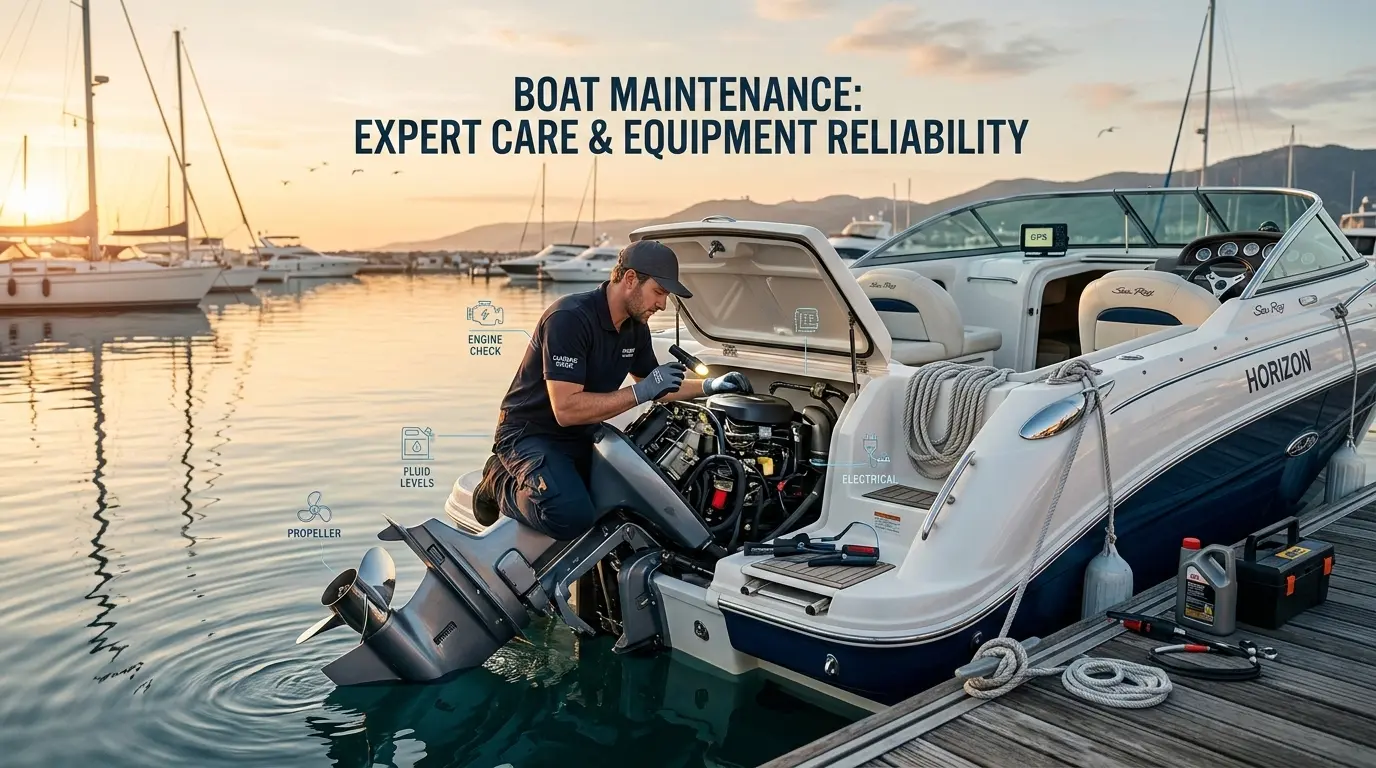
A vessel consists of multiple systems working together. Neglecting one can affect the entire boat.
1. Hull Maintenance: The Boat’s Structural Backbone
The hull is constantly exposed to water pressure, biological growth, and physical impacts.
Key Hull Maintenance Steps
- rinse with freshwater after every trip
- remove salt deposits
- apply marine wax
- inspect for cracks or gelcoat damage
- repaint antifouling coatings when needed
Marine organisms such as barnacles and algae increase drag significantly.
Hull Maintenance Impact on Fuel Efficiency
| Hull Condition | Fuel Efficiency |
|---|---|
| Clean hull | Optimal |
| Light algae growth | 5–10% loss |
| Heavy barnacle growth | 20–30% loss |
Even minor fouling dramatically reduces boat performance.
Engine Maintenance: The Heart of the Boat
The engine system is the most expensive and critical component.
Professional marine mechanics recommend strict maintenance schedules.
Core Engine Maintenance Tasks
- change engine oil and filters
- flush cooling system
- inspect belts and hoses
- check fuel filters
- lubricate moving components
Typical Marine Engine Maintenance Schedule
| Task | Frequency |
|---|---|
| Oil change | Every 100 hours |
| Fuel filter replacement | Every season |
| Cooling system flush | After saltwater trips |
| Impeller replacement | Every 200 hours |
| Spark plug inspection | Annually |
Ignoring these tasks is the most common cause of engine breakdowns offshore.
Fuel System Maintenance: Preventing Engine Damage
Fuel systems are often overlooked but critical.
Ethanol-blended fuel can attract moisture and cause contamination.
Fuel System Inspection Checklist
- inspect fuel lines for cracks
- check fuel filters and separators
- drain water separators
- ensure tank ventilation works properly
Warning Signs of Fuel System Problems
| Symptom | Possible Cause |
|---|---|
| Engine stalling | Fuel contamination |
| Reduced power | Clogged fuel filter |
| Rough engine idle | Water in fuel |
| Hard starting | Air leak in fuel lines |
Preventing fuel contamination avoids costly engine repairs.
Propeller and Drive System Maintenance
The propulsion system converts engine power into movement.
Even minor propeller damage can affect performance.
Propeller Inspection Checklist
- inspect for bent blades
- remove fishing lines around shaft
- check propeller nut tightness
- lubricate shaft components
Effects of Propeller Damage
| Damage Type | Result |
|---|---|
| Bent blades | Vibration |
| Cracked propeller | Reduced thrust |
| Misalignment | Engine strain |
Routine inspection prevents drivetrain stress.
Electrical System Maintenance: Preventing Failures at Sea
Modern boats rely heavily on electrical systems.
Components include:
- navigation lights
- GPS units
- radios
- bilge pumps
- battery systems
Corrosion is the biggest threat to marine electrical systems.
Electrical Maintenance Checklist
- inspect wiring insulation
- clean battery terminals
- test voltage levels
- check bilge pump operation
- confirm navigation lights work
Healthy Marine Battery Voltage
| Battery Condition | Voltage |
|---|---|
| Fully charged | 12.6V |
| Acceptable | 12.4V |
| Weak battery | 12.2V |
| Needs replacement | below 12V |
Battery reliability is essential for safety.
Rigging and Deck Hardware Maintenance
For sailboats especially, rigging failure can be catastrophic.
Even motorboats rely on deck equipment for safe operation.
Deck Hardware to Inspect
- cleats
- stanchions
- lifelines
- hatches
- railings
- winches
Salt buildup can corrode metal fittings quickly.
Regular lubrication and cleaning extend hardware lifespan.
Corrosion Control: The Silent Boat Killer
Saltwater corrosion is one of the biggest threats to marine equipment.
Marine vessels use sacrificial anodes to prevent damage.
How Sacrificial Anodes Work
These metal components corrode instead of critical boat parts.
Anode Replacement Guide
| Material | Water Type |
|---|---|
| Zinc | Saltwater |
| Aluminum | Saltwater & brackish |
| Magnesium | Freshwater |
Replace anodes when 50% worn.
Seasonal Boat Maintenance Checklist
Boat maintenance changes depending on climate and storage.
Spring Preparation
- inspect hull and bottom paint
- reinstall batteries
- test engine systems
- inspect safety equipment
Summer Maintenance
- frequent hull cleaning
- engine cooling checks
- battery monitoring
Winterizing Checklist
- drain water systems
- stabilize fuel
- fog engine cylinders
- disconnect batteries
- cover boat
Proper seasonal preparation prevents expensive damage.
Troubleshooting Common Boat Problems
Understanding early warning signs can prevent emergencies.
Boat Engine Overheating
Possible causes:
- clogged cooling intake
- failed impeller
- blocked thermostat
Immediate Action
- reduce engine speed
- check cooling water flow
- inspect intake blockage
Boat Vibrations at High Speed
Possible causes:
- damaged propeller
- shaft misalignment
- debris wrapped around prop
Inspect propeller before continuing operation.
Electrical System Failure
Possible causes:
- corroded terminals
- dead battery
- damaged wiring
Always carry a backup battery or emergency power source.
Safety Maintenance Checklist Before Every Trip
Experienced captains follow a simple rule:
Never leave the dock without checking critical systems.
Pre-Trip Boat Safety Checklist
- bilge pump functioning
- navigation lights operational
- fuel levels adequate
- battery voltage above 12.4V
- propeller clear of debris
- safety gear onboard
Taking five minutes to check systems can prevent serious accidents.
Cost of Ignoring Boat Maintenance
Many boat owners underestimate the financial impact of neglect.
Typical Marine Repair Costs
| Repair Type | Cost Range |
|---|---|
| Propeller replacement | $200–$600 |
| Engine cooling repair | $500–$2000 |
| Fuel system cleaning | $300–$900 |
| Marine battery replacement | $120–$400 |
| Hull repair | $1000+ |
Routine maintenance drastically reduces these expenses.
Expert Maintenance Mindset for Boat Owners
Experienced boat owners develop a simple philosophy:
Observe, clean, inspect, and record.
Keeping a maintenance log helps track recurring issues.
Maintenance Log Example
| Date | Task | Notes |
|---|---|---|
| March 10 | Oil change | Engine smooth |
| April 5 | Hull cleaning | Light algae |
| June 1 | Propeller inspection | Minor scratches |
Documentation helps detect patterns and improves resale value.
Final Boat Maintenance Master Checklist
To keep boat parts in top condition, follow this routine:
After Every Trip
- rinse hull with freshwater
- flush engine cooling system
- inspect propeller
- clean deck hardware
Monthly
- inspect wiring and batteries
- lubricate mechanical parts
- inspect rigging
Seasonal
- replace filters
- inspect hull coatings
- replace worn anodes
- service engine components
Following this schedule dramatically improves reliability.
The Real Reward of Proper Boat Maintenance
Boating is meant to be relaxing, not stressful.
A well-maintained vessel delivers:
- better fuel efficiency
- smoother performance
- safer voyages
- higher resale value
More importantly, routine care gives boat owners confidence when leaving the dock.
When every component—from the hull to the smallest fitting—is properly maintained, every journey on the water becomes safer, smoother, and far more enjoyable.
Authoritative References
American Boat and Yacht Council
https://abycinc.org
BoatUS Foundation Maintenance Guide
https://www.boatus.org
US Coast Guard Boating Safety
https://www.uscgboating.org
National Marine Manufacturers Association
https://www.nmma.org
Yamaha Marine Maintenance Guide
https://yamahaoutboards.com
