The market for frozen bakery products that includes bread loaves, chocolate croissants and cake bars is expanding since more customers are buying these products. The bakery products show growing demand as customers want products that offer both easy use and longer shelf life. The public demands immediate access to baked goods that remain fresh for multiple days.
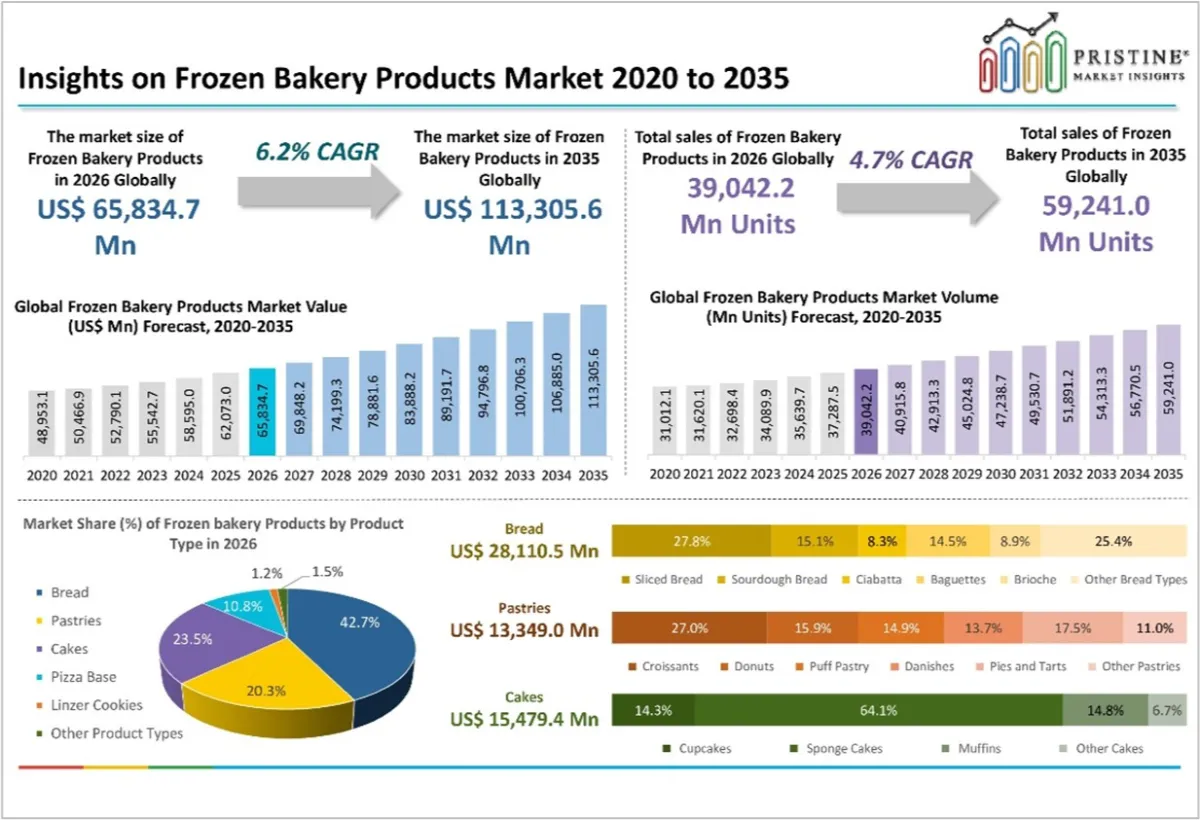
According to Pristine Market Insights, the global frozen bakery products market hit US$ 65,834.7 Mn in 2026 and could climb to US$ 113,305.6 Mn by 2035 with CAGR of 6.2%. That’s not small growth; it shows real consumer hunger for convenience. There’s a shift in how people eat now. Home bakers still value texture and taste, even when buying frozen.
They trust brands that keep dough soft and crust crisp after thawing. Now, this isn’t just about market growing it’s about flavor staying true to what you remember from a bakery counter. Progressively more families choose these items as they save time without sacrificing quality. It works mostly well during busy weeks or holiday seasons.
Table of Contents
Rising Consumer Demand for Convenience
In the present fast-moving life, convenience is the main focus of consumers, many of whom find that their chief concern is time-saving. The need for foods that can be prepared quickly and yet taste and feel good to the palate has grown by leaps and bounds. This has brought about the boom of frozen bakery products. The frozen bakery products market offers customers pre-baked bread and ready-to-bake pastries that deliver freshly baked flavors without requiring customers to bake their products.
The bread segment held the top position in 2026 with 16,663.4 Mn units, as bread serves as a daily essential food for households and foodservice establishments across the world. The most widely produced bakery category exists as it offers industrial producers low production expenses, easy operational efficiency and high production capacity. The products provide businesses with an effective preservation method as they enable organizations to preserve food products without losing their original flavor and quality.
Key Drivers:
- Busy Lifestyles: Urbanization together with demanding everyday activities, has created a market need for fast meal options.
- Health-Conscious Choices: Consumers now seek frozen bakery options that provide healthier choices through products as they contain low-sugar, low-fat and whole-grain ingredients.
Innovations in Freezing Technology
Freezing and storage technologies enhancement have been the major contributors to the frozen bakery products market expansion. New freezing methods allow the producers to keep the texture, flavor, and look of baked goods for a longer period. Individual Quick Freezing is a recent method that allows bakery products to preserve their original freshness even after being stored for a long time.
The problem of product deterioration that affected early frozen bakery products has been solved through these changes. Modern freezing solutions enable global storage and transportation of bakery products while maintaining their quality that provides consumers with frozen options that are available in any location.
Impact of Technology:
- Enhanced Product Quality: Freezing technology prevents texture or taste loss, improving consumer satisfaction.
- Increased Product Availability: Improved storage has led to broader distribution channels for frozen bakery products.
Shifting Consumer Preferences Toward Better Options
Frozen bakery manufacturers develop healthier products as more people worldwide now choose healthier food options. Consumers now understand food nutritional value better as they search for baked goods that contain low calories, low sugar and no gluten. The gluten-free frozen bakery products market share is 7.5% in 2026 and will grow to 4,964.3 Mn Units by 2035. The frozen bakery industry shows a trend where companies provide organic non-genetically modified organism and low-carb baked goods as more consumers demand healthy baked products, but some brands still rely on old recipes. That shift reflects real consumer interest. And trends don’t always move fast. Modern consumers prefer frozen bakery products that contain functional ingredients as they want products with fiber, proteins and probiotics.
Nutrition Focus Preferences:
- Gluten-Free Options: The demand for gluten-free frozen bakery products that include bread, cakes, pastries, etc., continues to grow as consumers want particular dietary options.
- Plant-Based Alternatives: Young consumers who prioritize healthy eating show increasing interest in dairy-free and vegan bakery products.
- Clean Labels: People increasingly prefer to buy products that contain basic elements and undergo limited processing and contain few artificial substances.
Expansion of Distribution Channels

The demand for frozen bakery products has increased worldwide, resulting in more distribution channels being established. Supermarkets, hypermarkets, online platforms and specialized stores have started to provide customers with an extensive selection of frozen baked goods. Online grocery shopping has gained momentum, enabling consumers to order frozen bakery items from their homes without any difficulty.
The supermarket and hypermarket segment of frozen bakery products reached 13,642.1 Mn Units in 2026 and will grow to 21,552.7 Mn Units by 2035. Foodservice establishments, from quick-service restaurants to cafes, have started to use frozen bakery products to help them to decrease their cooking time while they keep their product quality and taste.
Distribution Growth Factors:
- E-commerce Growth: As online shopping continues to gain in popularity, the freezing sector is anticipated to gain ground. People today more often value convenience than any other factor.
- Global Expansion: As per the demands of the increasingly well-liked frozen bakery products, companies are on the lookout to set up their operations in newer locations within the international markets that include third-world countries.
Challenges in Supply Chain Issues and Rising Costs
The frozen bakery product industry has multiple advantages, that face obstacles that will hinder its future development. The producers are currently facing major challenges as they need to deal with fluctuations in raw material prices, and they face a shortage of workers and their supply chains experience disruptions throughout the world. The prices of wheat, butter and sugar, as they serve as the three primary components of frozen bakery products, have experienced rapid price increases during the past few weeks. This situation has resulted in higher expenses for manufacturing products. The global supply chain problems, particularly those that impact international trading operations, have caused delays in delivering products to both retailers and customers.
Key Challenges:
- Raw Material Volatility: The essential ingredients of the business experience price changes that create difficulties for both product pricing and profit calculation.
- Supply Chain Disruptions: The global supply chain system established its weakness through the disruptions caused by COVID-19 and other similar events.
Regional Insights- North America and Europe Dominance
Both North America and Europe have been the leading markets for frozen bakery products for a long time. The higher disposable incomes, the faster life-rhythms and more inclination towards convenience food are attributing factors to this. The presence of leading frozen bakery product manufacturers in these regions creates a market growth factor for their business operations. The present dominating company of the region will continue to hold its power during the next period. The Asia-Pacific region is going to register the highest growth rate compared to other regions in the world.
People require more goods as they live in cities and their earnings increase according to market trends. The Western bakery products that originate from Western countries have become a popular trend among people in China and India. As a matter of fact, the demand for frozen food, including bakery products, is increasing as the middle class of the region is expanding.
Promising Future for Frozen Bakery Products
The frozen bakery products market is poised for continual growth due to the increased preference of consumers for convenient, healthy and premium food options. The market will fulfil global consumer needs as technological developments and new product lines will create additional product options. The frozen bakery products market demonstrates strong potential for growth since it continues to develop its operations in response to international food market trends despite existing difficulties in supply chain management.