Story-driven, research-backed, and execution-focused.
Contents
Why Are Traditional Teaching Methods Struggling With Modern Students?
Last year, a senior teacher told me something honest:
“My lessons are well prepared, but my students look bored within 10 minutes.”
That sentence captures the core crisis in education today.
Students are not failing learning.
Traditional delivery models are failing modern learners.
Today’s students live in an interactive, digital, fast-feedback world. Static lectures and rote memorization no longer match how their brains engage, process, and retain information. To remain effective, teaching must evolve from content delivery → experience design.
According to UNESCO’s education transformation framework:
https://www.unesco.org/en/futures-education
Modern teaching is no longer about “covering syllabus.”
It’s about designing meaningful learning experiences.
Let’s walk through eight proven approaches that work not just in theory — but in real classrooms.
How Does Technology Integration Improve Learning Outcomes?
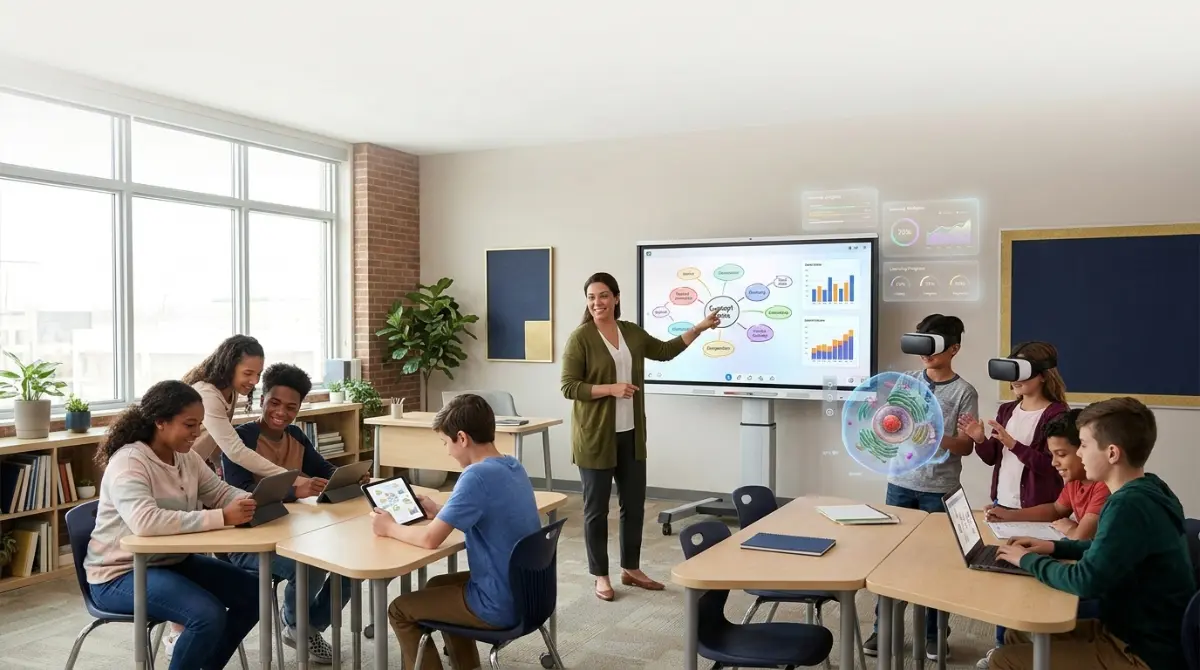
In one Grade 7 classroom, introducing simple interactive quizzes increased participation from 40% to 92% within three weeks.
That’s the power of intentional technology use.
Technology doesn’t replace teachers.
It amplifies engagement, personalization, and instant feedback loops.
Practical Implementation
- Use LMS platforms for assignment tracking
- Incorporate simulations for science concepts
- Apply instant polls to assess understanding
Expert Insight
Technology fails when used as decoration. It succeeds when aligned with learning objectives and cognitive load balance (Cognitive Load Theory).
Key Benefits Table
| Teaching Goal | Technology Tool | Result |
|---|---|---|
| Instant Feedback | Google Forms / LMS quizzes | Faster concept correction |
| Visual Learning | Simulations, animations | Deeper conceptual clarity |
| Self-paced mastery | Adaptive learning apps | Reduced performance gaps |
Why Does Project-Based Learning Increase Real Understanding?
Students don’t truly learn by memorizing answers.
They learn by solving meaningful problems.
In a project-based economics class, students designed a mock business. Result? Concepts like budgeting, profit, and cost analysis suddenly made sense.
How PBL Works
Students investigate real-world problems, collaborate, and present solutions. This aligns with constructivist learning theory, where knowledge is actively built, not passively received.
Research reference:
https://www.oecd.org/education/ceri/innovative-learning-environments.htm
Implementation Checklist
- Choose real-world problem topics
- Form collaborative student teams
- Set milestone-based deliverables
- Use rubrics for evaluation
What Makes Personalized Learning So Powerful?
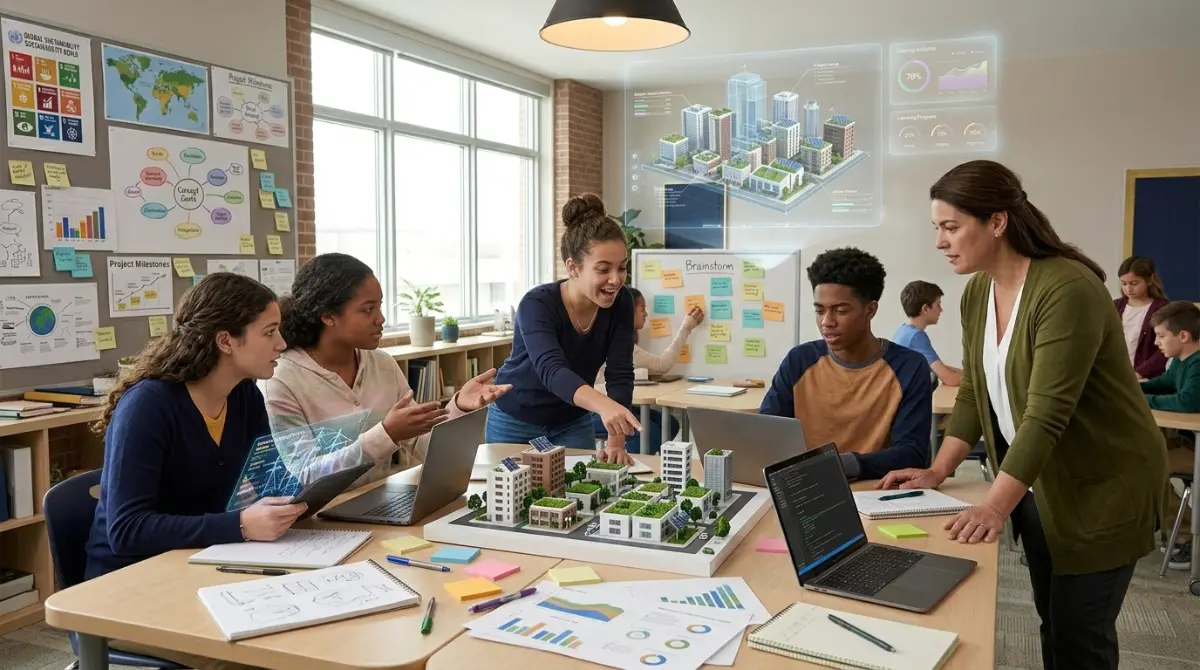
Walk into any classroom and you’ll see the truth:
No two students learn at the same speed.
Personalized learning adapts instruction pace and methods to individual learner needs. It uses assessment data to tailor content, ensuring neither fast learners get bored nor struggling learners get lost.
Classroom Scenario
When a teacher introduced adaptive quizzes, weaker students improved test scores by 28% within one term.
Expert Tip
Personalization is not separate lesson plans for everyone.
It’s flexible pathways toward the same learning goals.
Can Gamification Really Improve Student Motivation?
Yes — but only when designed carefully.
Adding points, badges, and levels taps into intrinsic motivation systems. However, the real benefit lies in progress visibility, not competition.
Psychological Insight
Gamification works because it activates dopamine-driven reward loops, increasing persistence and effort.
Gamification Strategy Table
| Element | Classroom Example | Outcome |
|---|---|---|
| Points | Quiz score tracking | Engagement boost |
| Levels | Skill mastery tiers | Clear progress motivation |
| Challenges | Weekly missions | Improved retention |
How Do Collaborative Learning Communities Strengthen Critical Thinking?
Modern workplaces demand teamwork, negotiation, and shared problem-solving. Collaborative classrooms mirror this reality.
In one literature class, peer discussion groups improved interpretation depth more than solo reading assignments.
Key Strategy
- Structured group roles
- Peer feedback sessions
- Guided debate activities
Social learning theory supports this model: students learn effectively through interaction and shared cognition.
Reference:
https://www.simplypsychology.org/bandura.html
Why Should Schools Integrate Real-World Skills Into Curriculum?
Students often ask:
“When will I ever use this in real life?”
That question is valid.
Modern teaching integrates:
- Financial literacy
- Digital competency
- Communication skills
- Problem-solving scenarios
When lessons connect to life, motivation naturally increases.
Example
Teaching percentages through budgeting exercises creates immediate relevance and deeper retention.
How Does Data-Driven Teaching Improve Student Performance?
Great teachers don’t guess learning gaps. They identify them using evidence. Tools such as classroom management software streamline this process and help educators organize lessons, monitor progress and maintain a structured environment.
Using classroom analytics, educators can detect:
- Who is struggling early
- Which concepts are misunderstood
- Where revision is needed
Implementation Model
| Data Type | Use Case | Decision Impact |
|---|---|---|
| Quiz Scores | Identify weak concepts | Re-teach targeted lessons |
| Attendance Patterns | Detect disengagement | Early intervention |
| Participation Metrics | Evaluate engagement | Adjust teaching style |
When used ethically, data transforms reactive teaching into proactive guidance.
Why Is Encouraging Global Perspectives Essential in Modern Education?
Today’s students will work in globalized environments. Exposure to diverse cultures and viewpoints builds empathy, adaptability, and critical thinking.
Teachers can introduce:
- International case studies
- Cross-cultural discussions
- Virtual exchange collaborations
This prepares learners not just academically — but socially and ethically for interconnected societies.
Expert Teacher Implementation Checklist
Daily Practice Checklist
- Use at least one interactive engagement method
- Monitor student understanding through quick assessments
- Connect lessons to real-life applications
- Encourage peer discussion or collaboration
- Reflect and adjust teaching based on feedback data
Weekly Improvement Checklist
- Review performance analytics
- Personalize support for struggling learners
- Introduce one project-based or inquiry-driven task
- Evaluate effectiveness of teaching strategy used
Frequently Asked Questions (FAQs)
Which modern teaching method works best for beginners?
Start with project-based learning and simple technology integration. They offer immediate engagement benefits without overwhelming the classroom structure.
Can traditional lectures still be useful?
Yes, but only when blended with interactive questioning and follow-up activities. Pure passive lecturing reduces retention significantly.
How can teachers manage personalized learning in large classrooms?
Use grouped differentiation strategies and adaptive assessments instead of fully individualized lesson plans.
Does gamification reduce academic seriousness?
No. When aligned with learning goals, gamification enhances motivation while maintaining rigorous standards.
Final Thoughts: What Defines a Truly Modern Teacher Today?
Modern teaching is not about replacing textbooks with tablets.
It’s about shifting from information delivery → learner transformation.
Teachers who:
- Use data intelligently
- Personalize learning pathways
- Integrate real-world relevance
- Encourage collaboration and inquiry
…are not just teaching lessons.
They are shaping adaptable, confident, future-ready learners.
The future of education does not belong to those who teach the most content.
It belongs to those who design the most meaningful learning experiences.
